
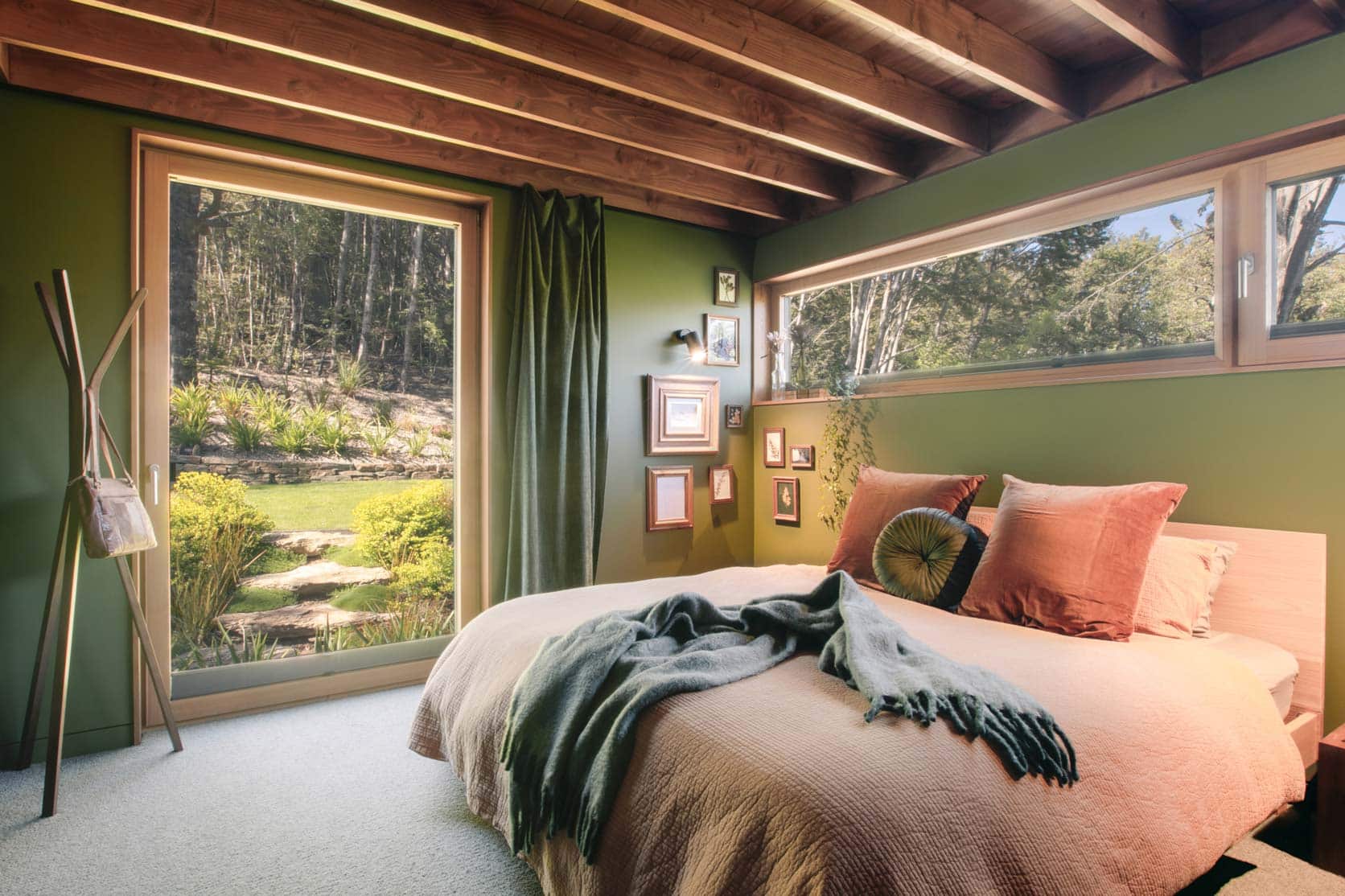
Winner: Interiors and Renovation Scale Category

Location: Bob’s Cove, Aotearoa New Zealand
Client: Private
Typology: Residential
Site Area: 130m2
Owner: Carolin Friese Architecture
Architect and Interior Designer: Carolin Friese
Engineer: Doug McConnaughy
Builder: Will Guthrie
Tall Tree House, located in the picturesque Bob’s Cove near Queenstown, New Zealand, exemplifies the principles of biophilic design, seamlessly blending modern architecture with nature. Nestled in a mature beech forest at the base of a mountain range, this small home integrates natural elements into its design to enhance the well-being of its residents while ensuring sustainability and high performance in a challenging environment.The design thoughtfully balances privacy, environmental integration, and passive solar gains, all while respecting the natural landscape.
Study Authors: Samantha Smith, Laura Cowie and Laura Hamilton-O’Hara
How is it biophilic?
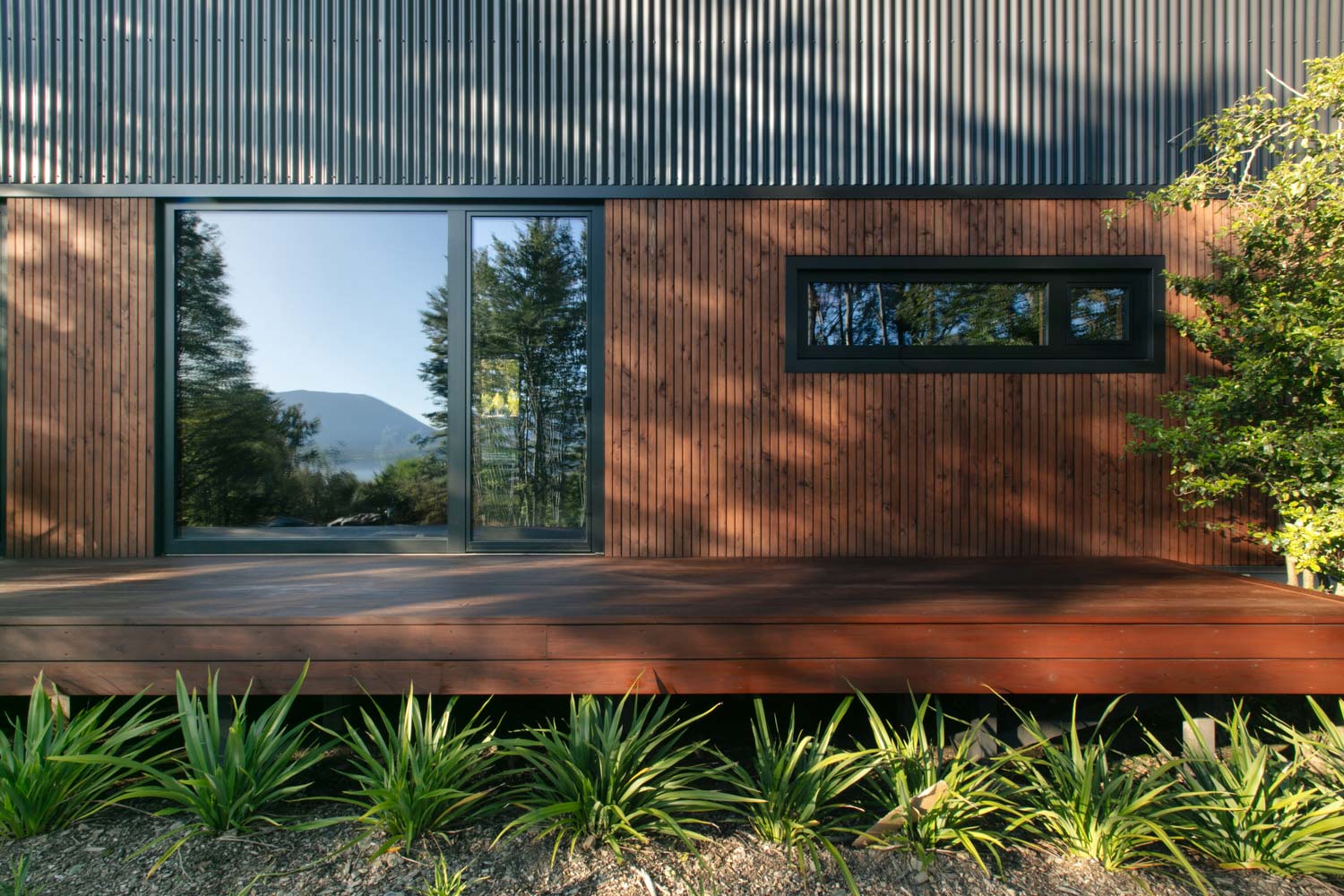
Cultural Consideration: A build that can be fully disintegrated and reused (except for the concrete footings for the piles), designed with the cultural and ecological values of Wāhi Tūpuna (governed by Manawhenua) in mind.
Connection to Culture: The house is built on piles to allow the land to breathe.
Sense of awe: View to mountains.
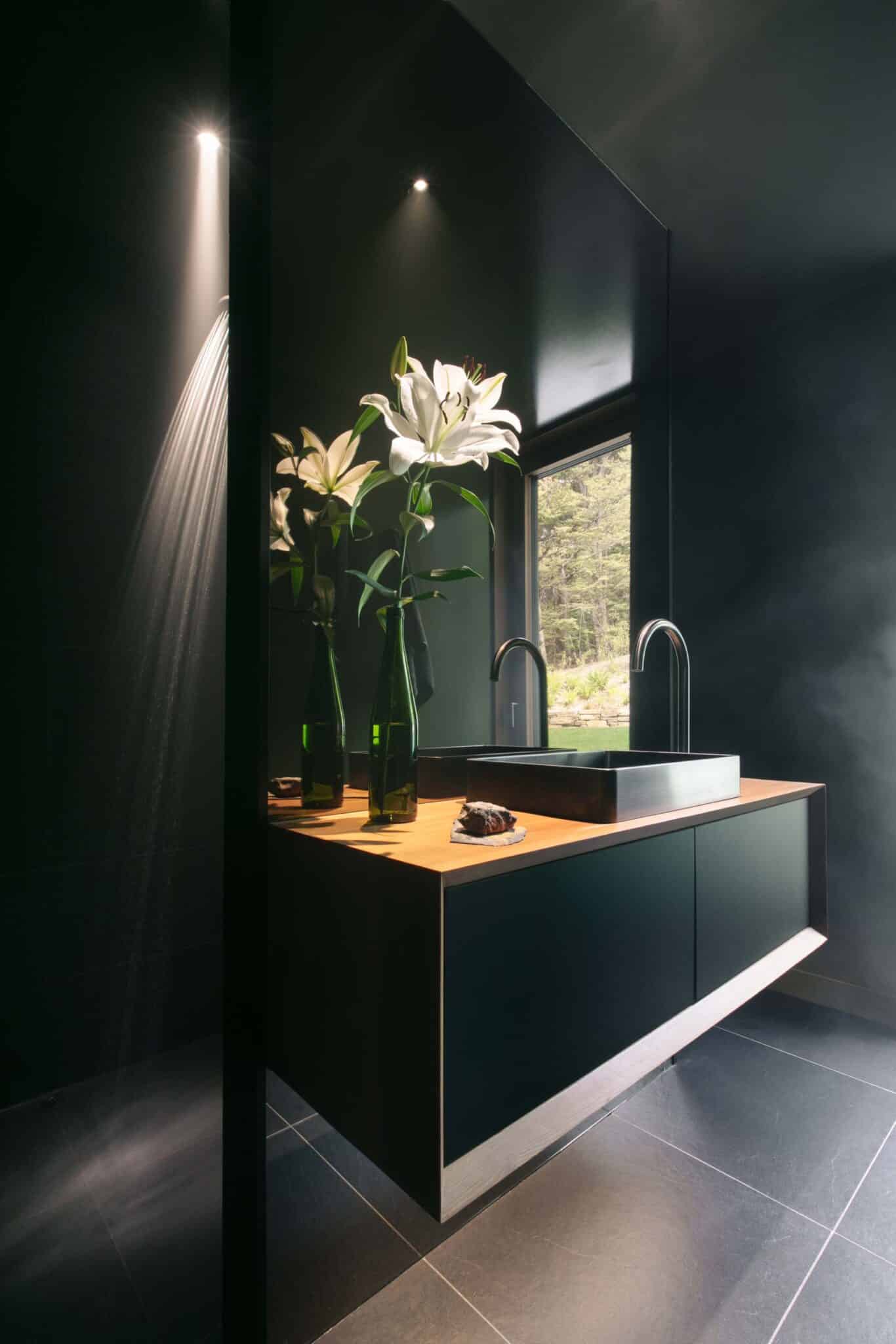
Sensory variability: the bathroom uses dark colours in a small space making it almost cave like in contrast to the rest of the house.
Light and shadow: Clever uses of lighting and windows emphasise water flow in the shower and glimpses of outdoors.
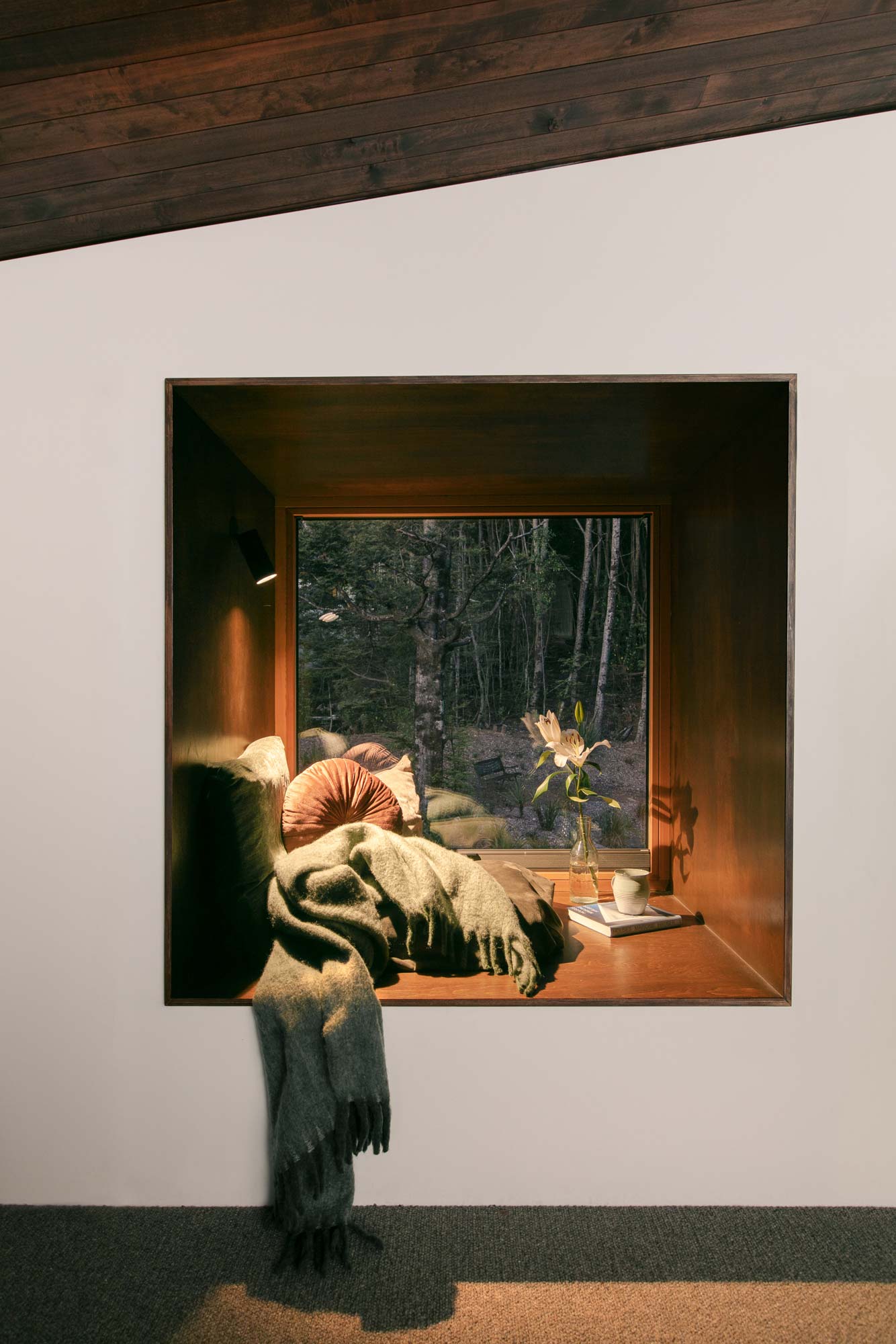
Prospect and refuge: The window nook provides a sense of safety and ability to look far.
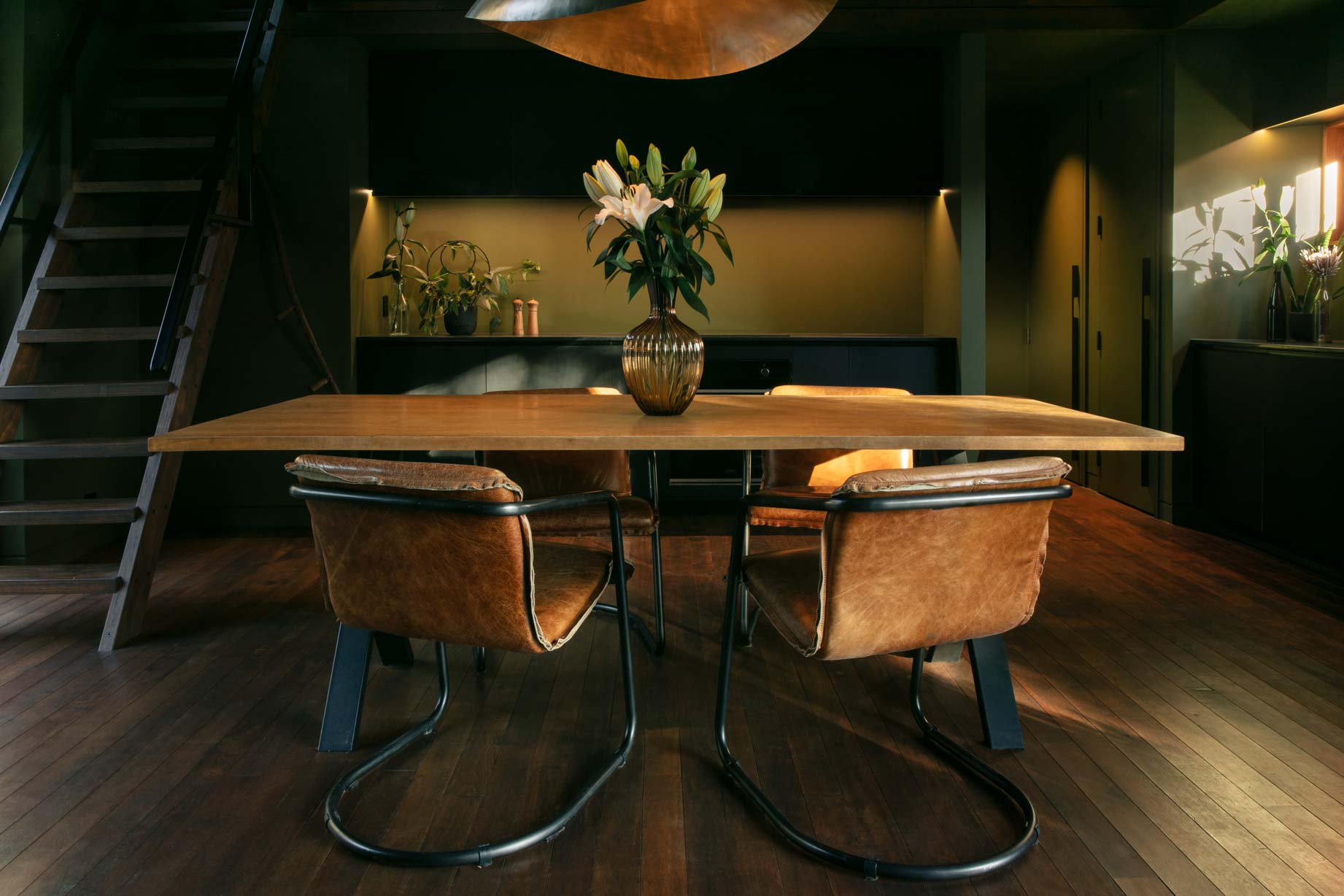
Indirect connection with nature through the strong use of natural materials. Showcased here is a dark, walnut-stained timber flooring paired with earthy leather chairs.
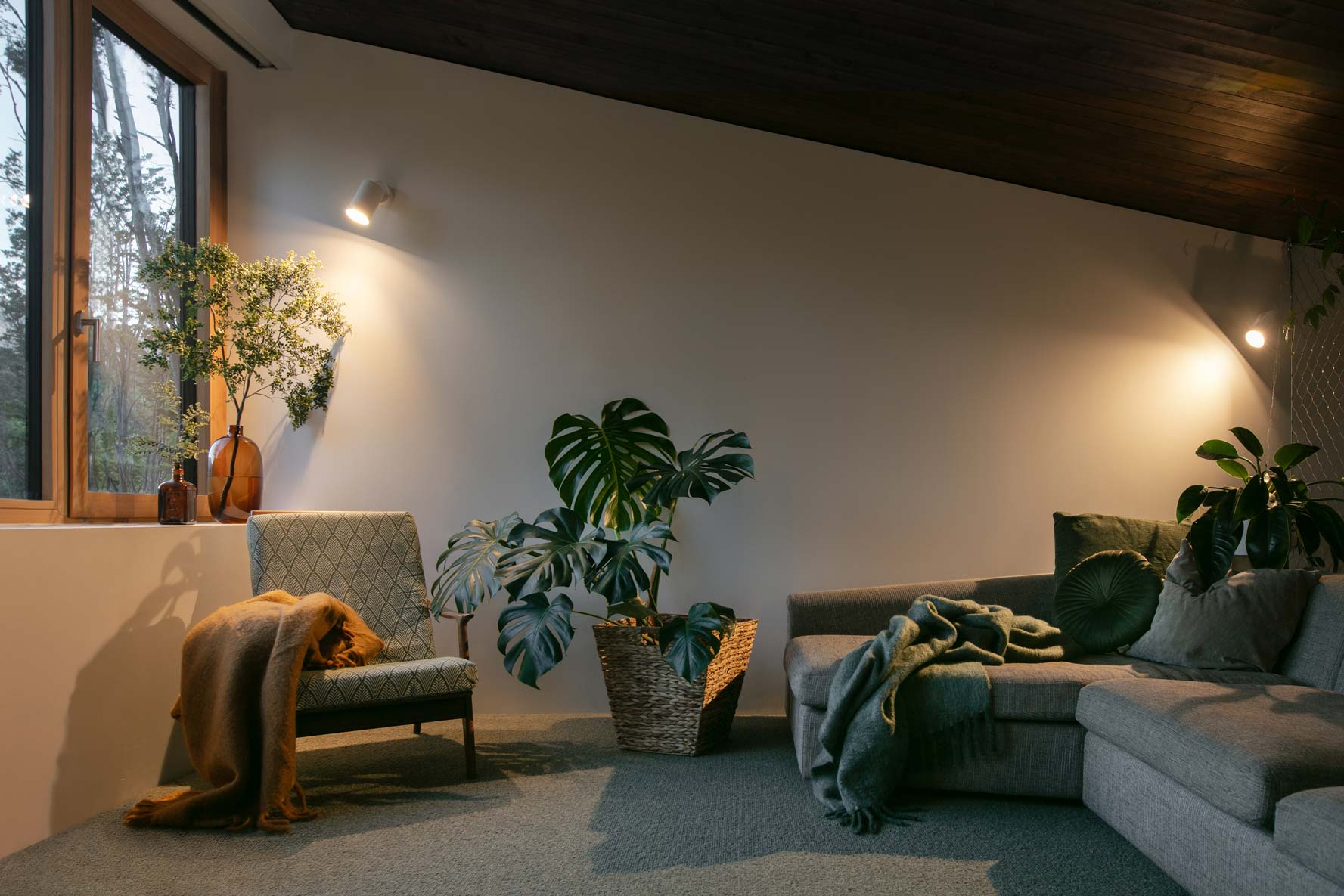
Locally-sourced wool insulation plays a crucial role in ensuring that the home stays warm during winter and cool during summer.
Warm light: Warm wall spotlights provide indirect illumination, reflecting off the light‑coloured walls to create a soft contrast with the dark timber ceiling and enhance the comfort and warmth of the space.
Indirect connection to nature: Use of beautiful timber beams and colours that mimic the flora outside.
Curiosity and enticement: Winding stepping stones invite exploration.
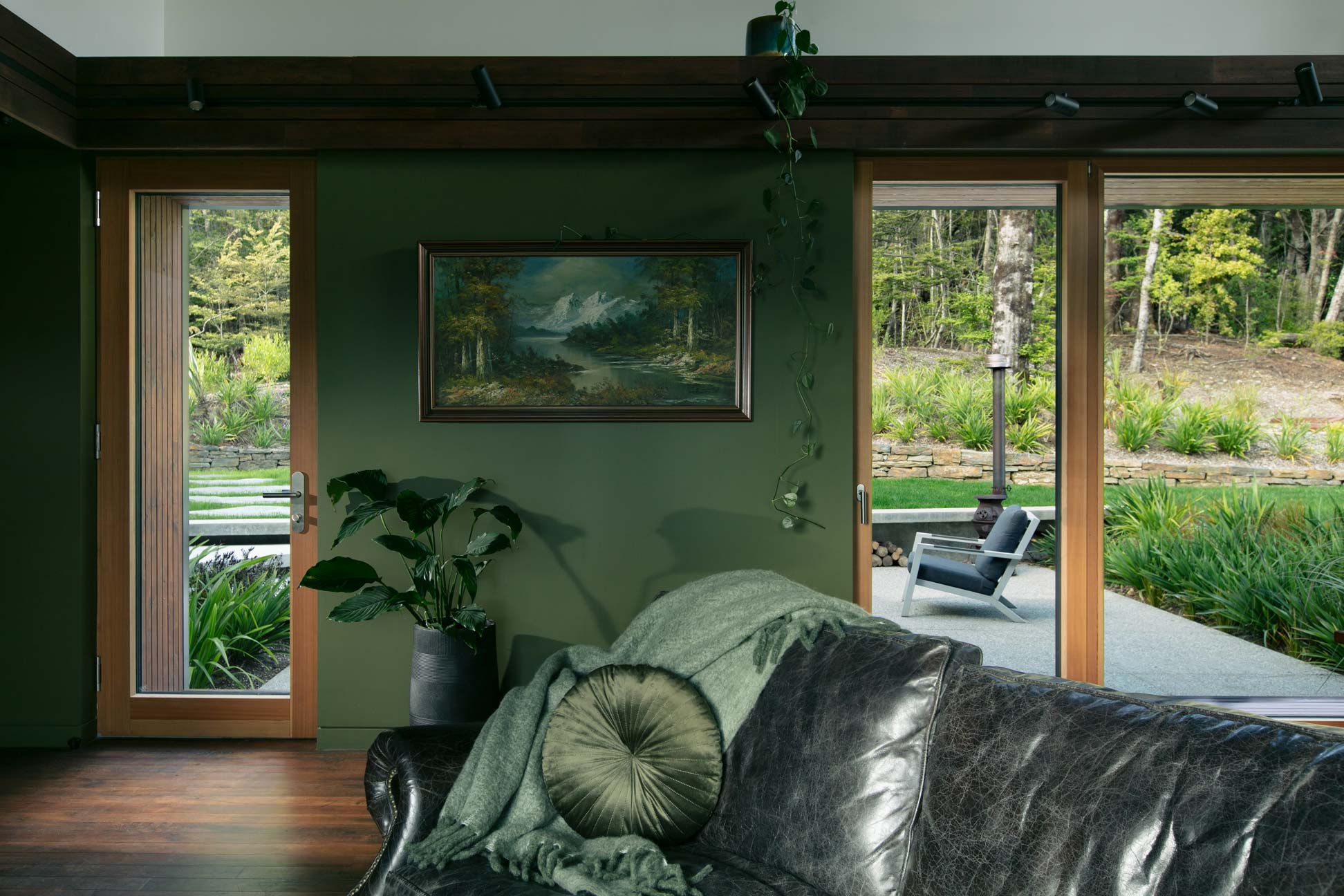
Subtle indirect connection to nature via artworks depicting natural scenes and linking colourscapes from inside to outside.
Patina of Time: The aged leather couch introduces a sense of organic materiality and time-worn character to the otherwise new space. Its natural patina reflects the passage of time, softening the straight lines and hard surfaces and aligning with biophilic design principles that value material aging and authenticity.
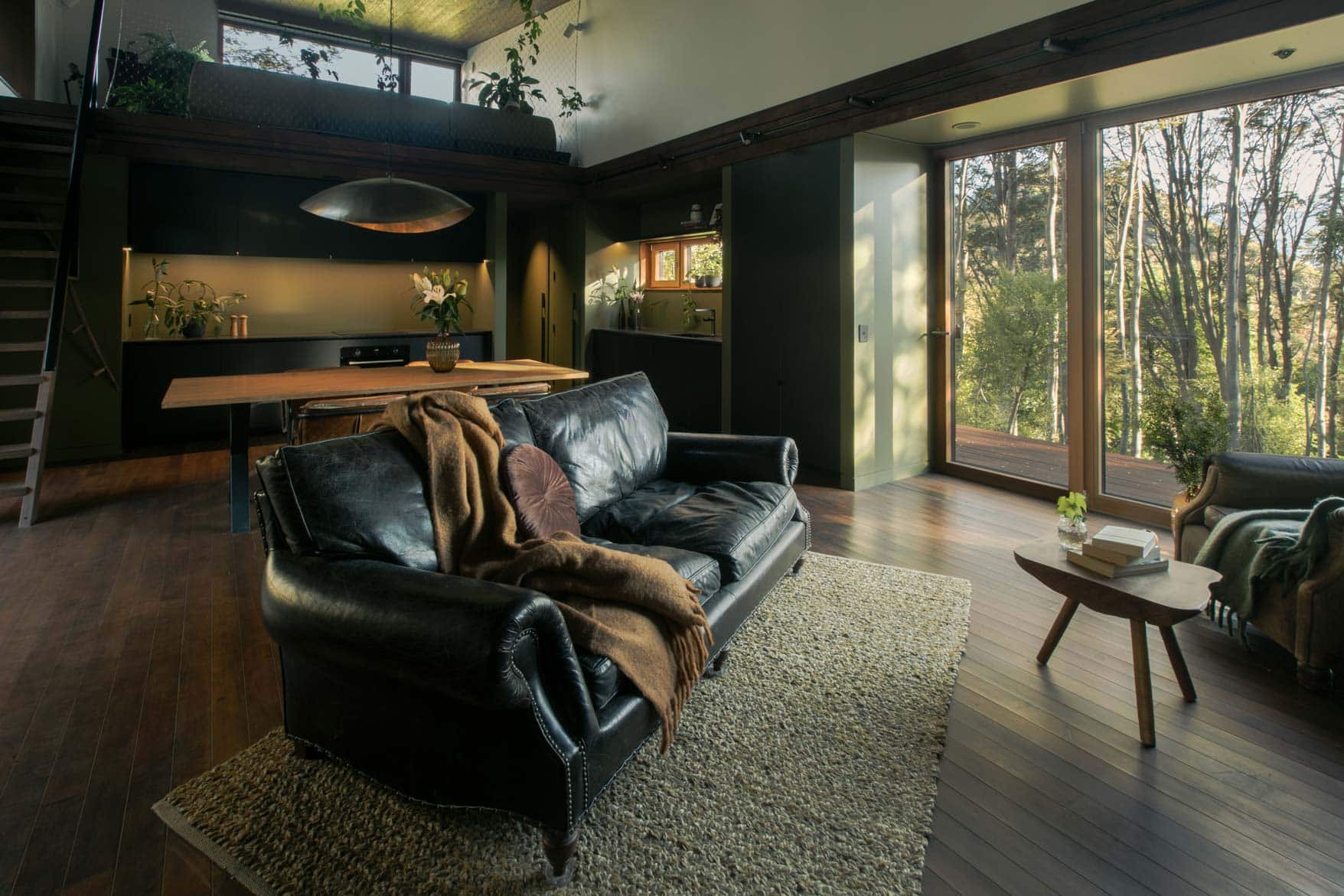
Natural Rhythms: Windows allow the sunlight to flood the space throughout the day (late afternoon through this window), promoting alertness and well-being as the natural light aligns with the body’s circadian rhythms.
Organic Shapes: Resisting straight lines and rigid geometry, the dining table light fitting references natural forms. Its shell‑like shape—expressed through gentle ridging and a contrast between inner and outer surfaces—reinforces a connection to nature.
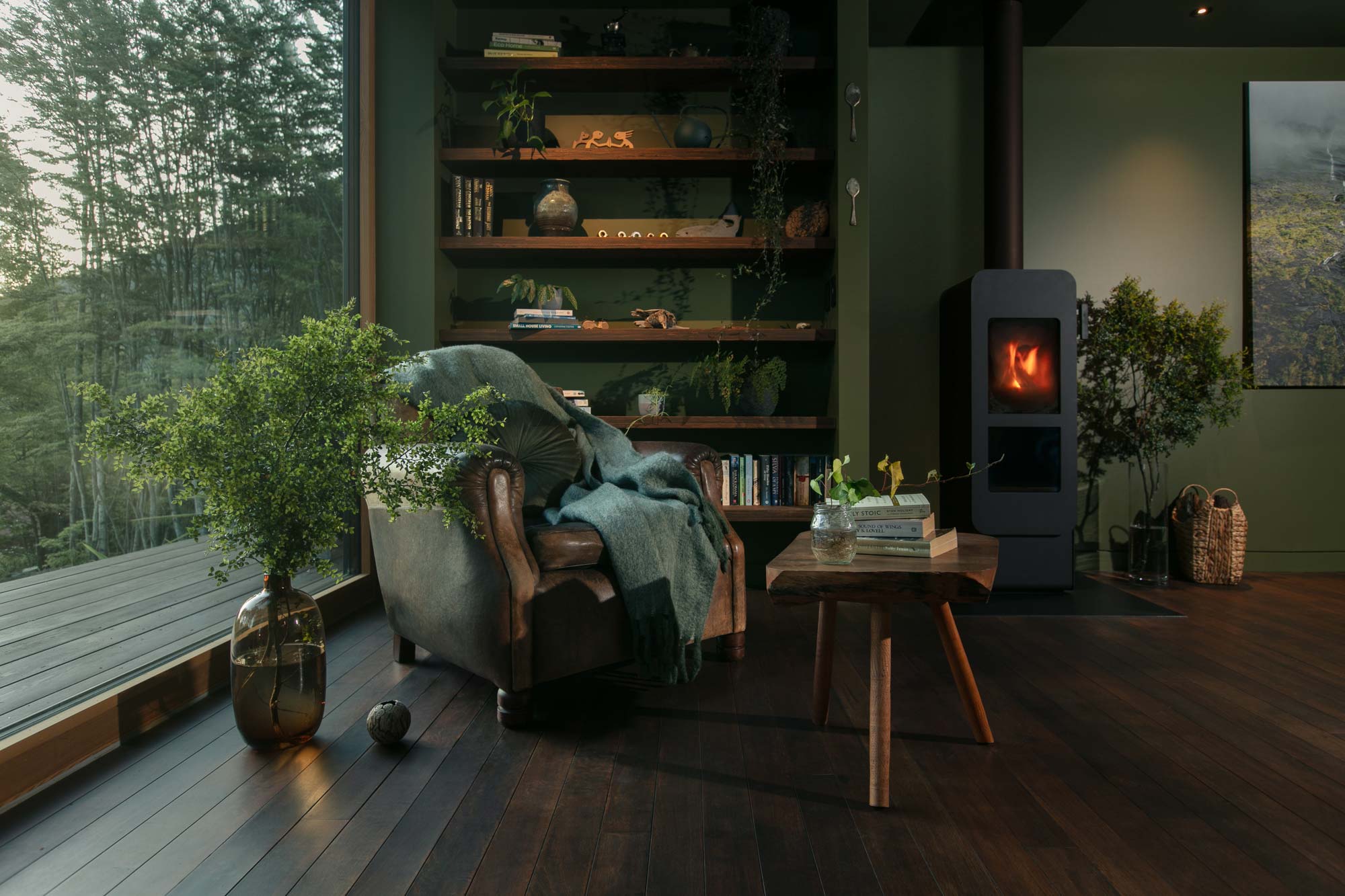
Direct connection to Nature: Large windows frame beautiful external views while allowing occupants to follow the seasonal weather patterns and daily cycles of the sun.
Internally, a cosy seat around a fireplace connects occupants with the primal element of fire and provides a focal point with pleasing warmth, colour and movement.
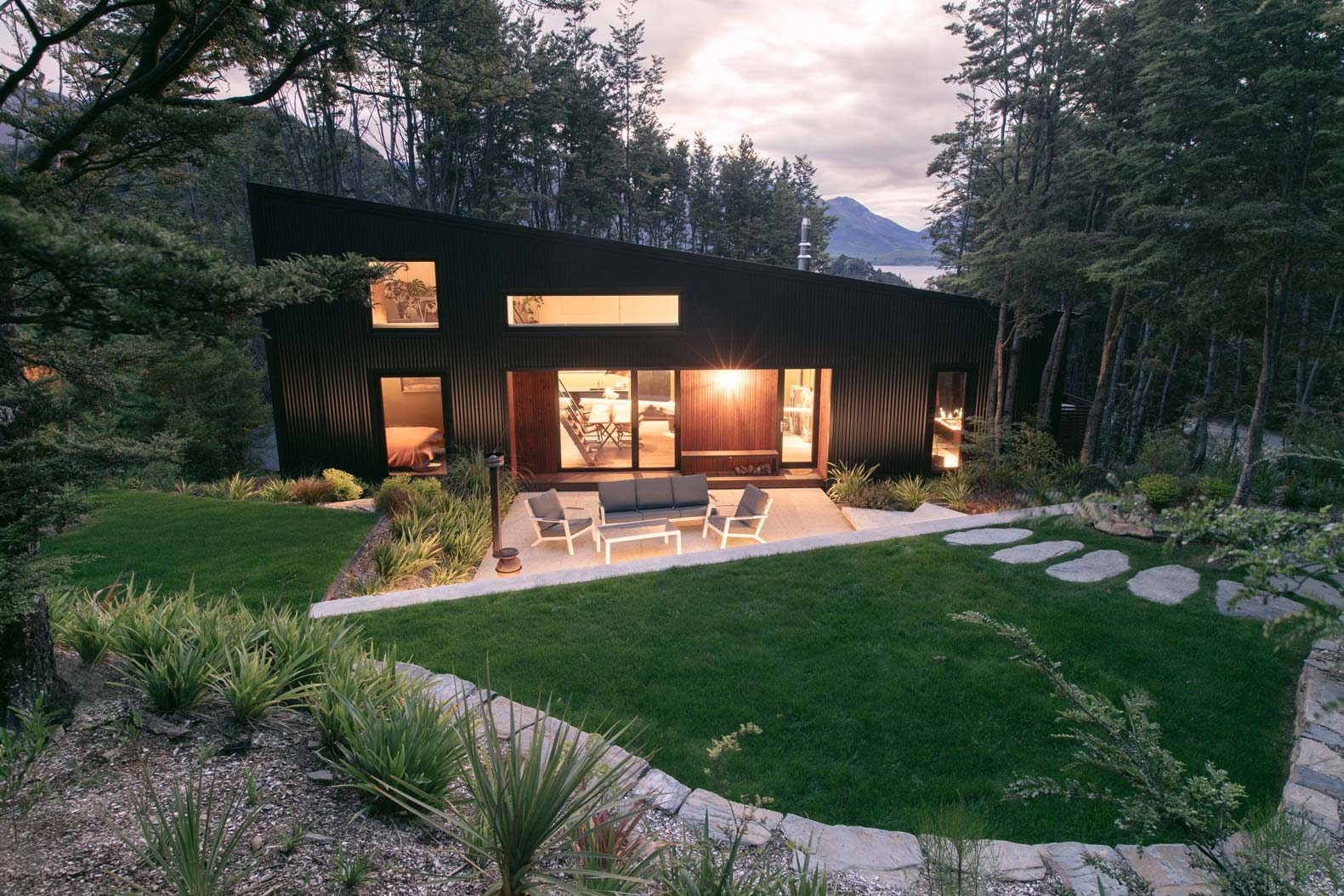
Natural Rhythms: Boundaries between inside and outside blur, allowing the occupants to experience the changing seasons and rhythms of nature in a meaningful and immersive way.
Direct Connection with Nature: Garden courtyards and level decks provide spaces for the inhabitants to engage with nature directly.
Connection to Culture: The careful positioning of the home on the site, the use of passive solar design, and the materials chosen all speak to a deep understanding of the land’s rhythms.
