
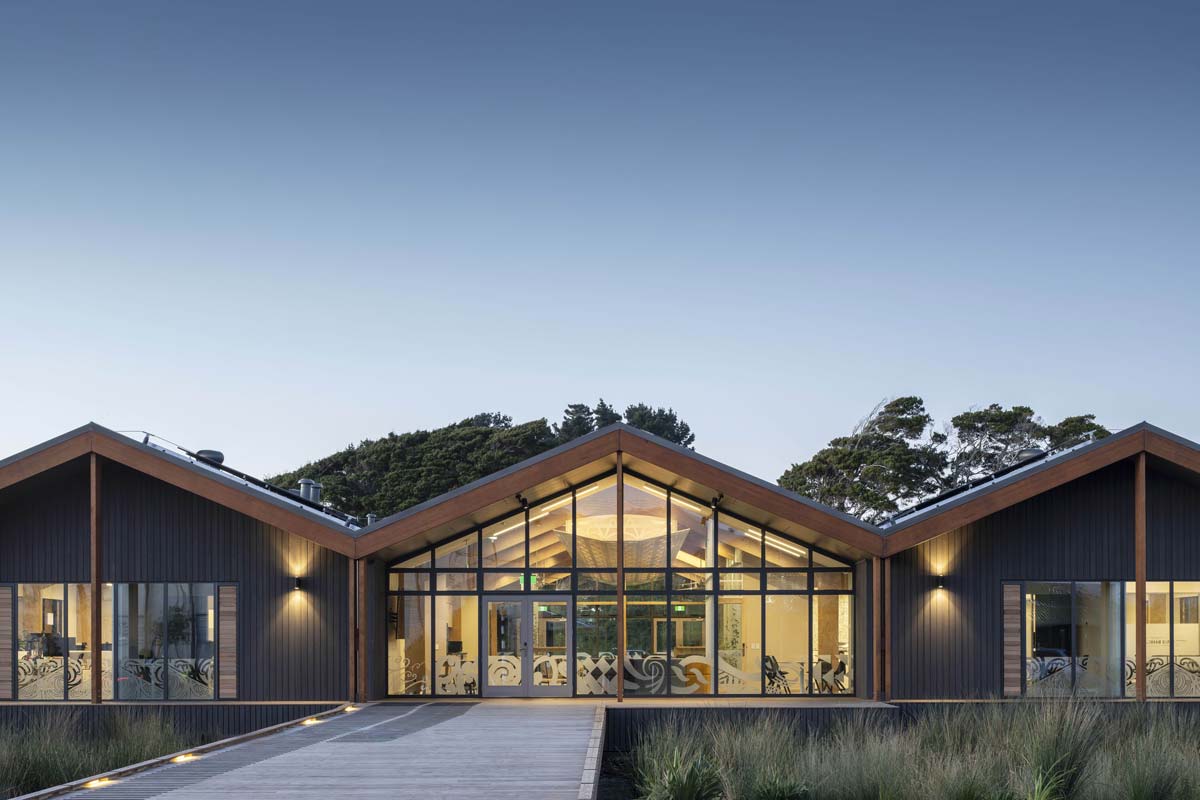
Winner: Urban and Community Scale Category

Location: Ōtaki, Aotearoa New Zealand
Client: Te Wānanga o Raukawa
Typology: Education
Site Area: 22,075m²
Owner: Te Wānanga o Raukawa
Architect: Tennent Brown Architects
Engineer: Dunning Thornton Consultants
Landscape Architects: Wraight + Associates
Pā Reo, located at Te Wānanga o Raukawa in Ōtaki, is a landmark educational project by Tennent Brown Architects. Guided by the Living Building Challenge (LBC) 4.0, it exemplifies regenerative design, embracing all seven LBC Petals—Place, Water, Energy, Health & Happiness, Materials, Equity, and Beauty—and demonstrating a holistic commitment to sustainability, cultural integrity, and community wellbeing.
The Pā Reo Campus is envisioned to reflect and support ngā kaupapa o Te Wānanga o Raukawa. Designed as an enclave, it comprises one administrative (Te Moana o Raukawa) and three research and educational facilities (Waitapu, Rangataua, Mīria te Kakara) that are dedicated to supporting te reo Māori ānake. Central to the project’s ethos is matauranga Māori (Māori knowledge systems) and teaching te reo Māori—the Māori language, from which cultural understanding springs.
Natural ventilation is incorporated throughout most spaces, contributing to sustainability and occupant comfort. Water neutrality is supported by roof water collection and the reinstatement of wetlands and raingardens—honouring the site’s history by revealing and celebrating its water story, while supporting a balanced water cycle.
This project is the fourth project to be constructed by Tennent Brown at the Wānanga, and represents a strong ongoing relationship. The design exercises efficient use of built spaces and economy of design, manifesting in low ongoing maintenance costs and flexible spaces.
Pā Reo is currently undergoing the final audit process for Living Building Certification.
Study Authors: Tricia Love and Stephen Choi
How is it biophilic?
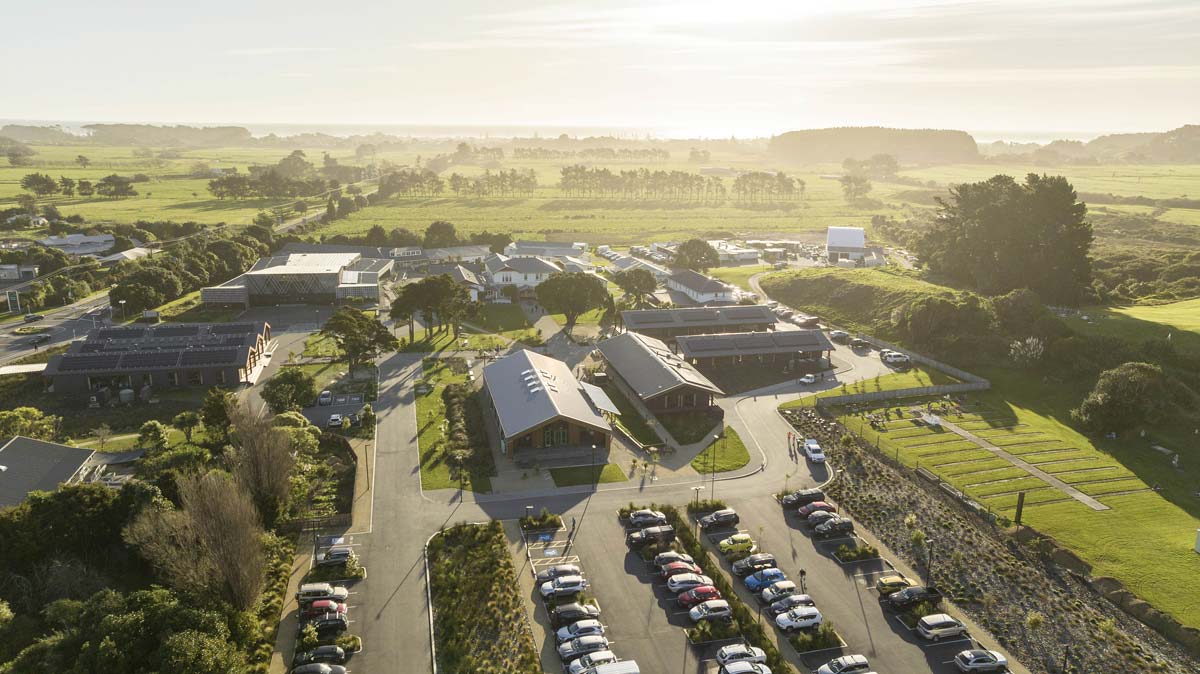
Visual Connection with Nature: Central Totara trees serve as natural kaumātua (elders), creating a strong focal point.
Prospect and Refuge: The campus design offers views to the Tararua ranges alongside sheltered spaces under eaves and raised decks, creating a balance between openness and protection that reduces stress and increases comfort.
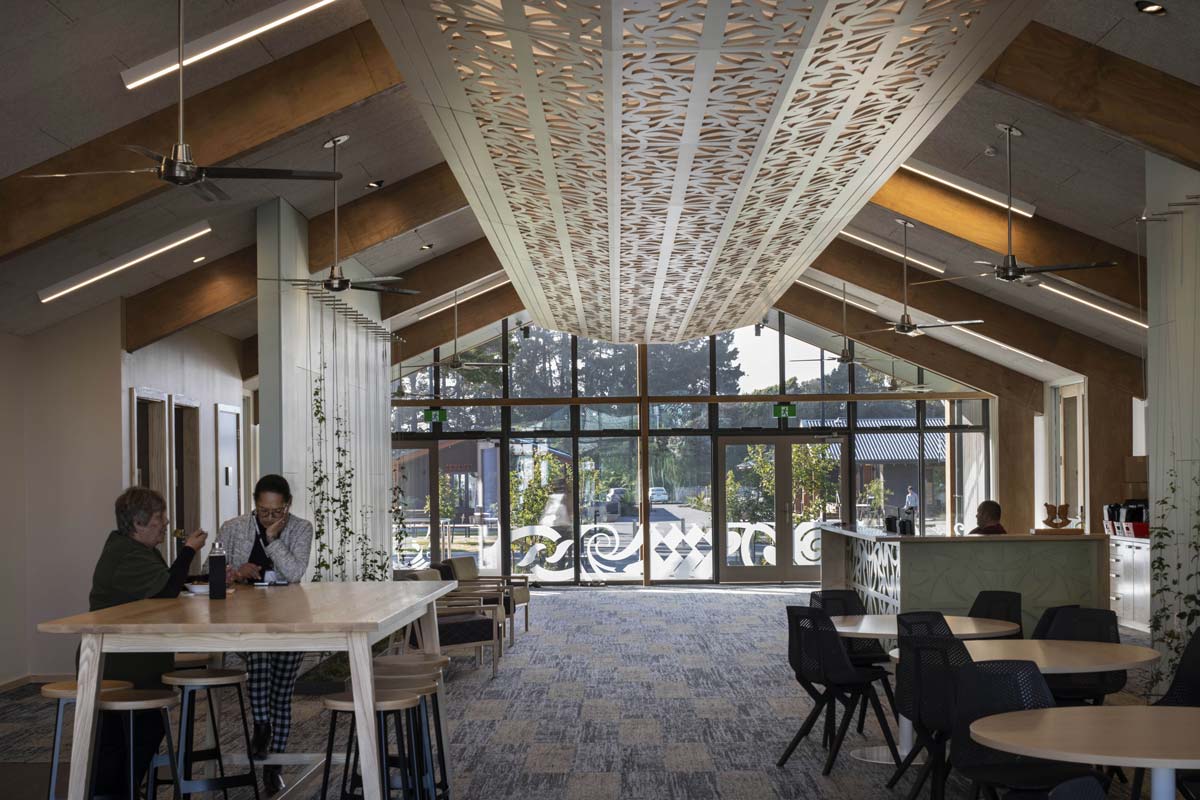
Visual Richness: Irirangi kōrero incorporates Māori patterning reflecting the Southern Cross constellation.
Dynamic and Diffuse Light: Strategic skylights, atria, and the irirangi kōrero (back-lit canopy) break up and reflect light throughout interior spaces, maintaining healthy circadian rhythms and enhancing attention through natural daylight patterns.
Material Connection: Extensive wood use creates warmth and holds cultural significance.
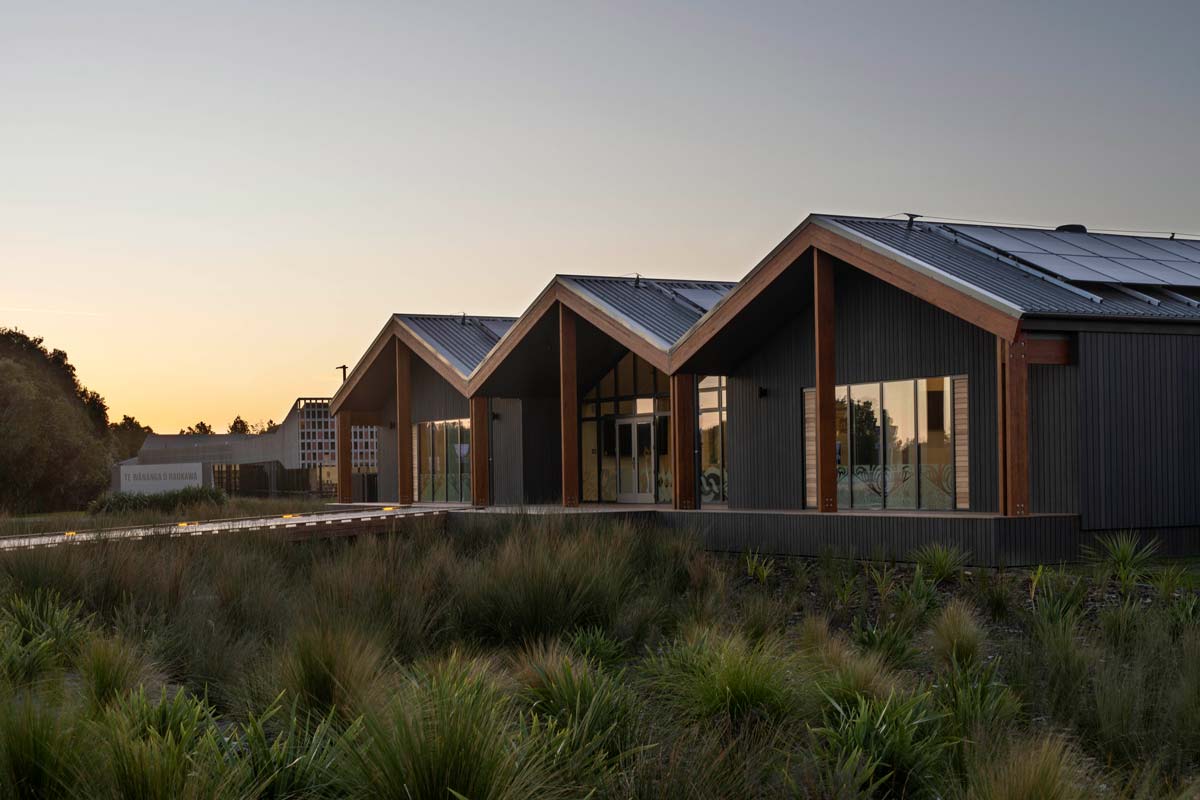
Cultural Connection to Place: Mass timber portals reflect traditional wharenui forms.
Transitional Spaces: A wetland bridge entrance creates a daily transitional experience helping occupants mentally prepare for work.
Indoor-Outdoor Flow: Windows, doors and louvres allow views of greenery from all areas.
Place-based Relationships: Indigenous ecology is celebrated through the exclusive use of native plants (except for urban agriculture purposes), recreating habitat that would have historically existed on the site.
