
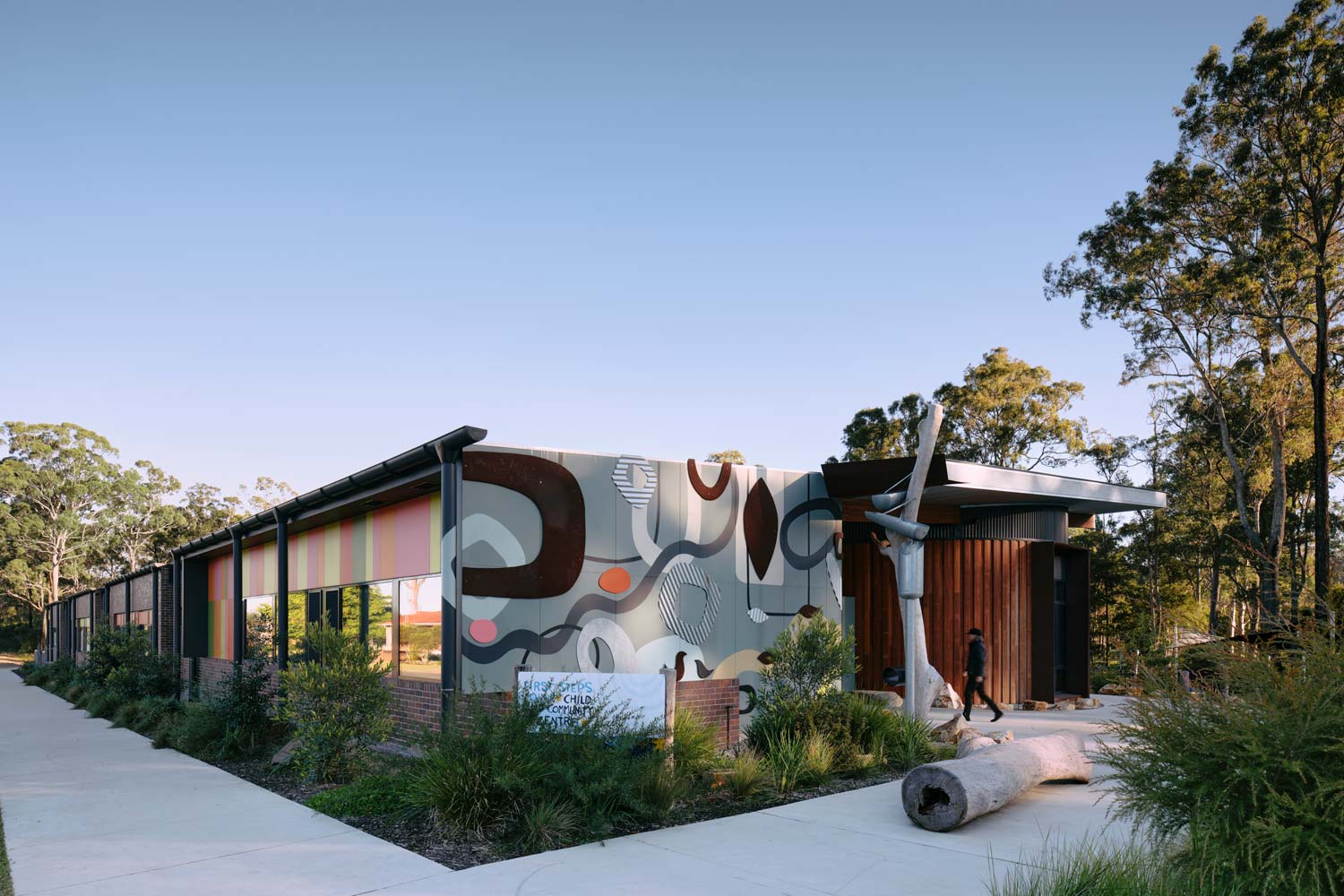
Winner: Building Scale Category

Location: Taree, NSW, Australia
Client: First Steps Count, Child and Community Hub
Typology: Education
Site Area: 16,630m²
Architects: Austin McFarland Architects, Pidcock Architects
Builders: Duber Constructions
Structural Engineers: Cantilever Studio
Mechanical Engineers: Blue Green Engineering
Landscape Architect: Loci Collective
Civil and Hydraulic Engineers: CJ Arms
Arts Director: Ali Haigh
First Steps Count is an inspiring example of collaboration, community, and biophilic design. Through an integrated design approach, every opportunity to explore and celebrate biophilic principles has resulted in a community space that successfully embraces the natural environment, creating a warm and welcoming facility for families with children, many of whom face significant adversity.
The Centre has been purposefully designed to promote health, wellbeing and healing both for the community that it serves and the Country in which it sits softly within. It has been designed in a way that allows the building to evolve over time, with materials that age gracefully, letting the building tell its own story alongside the community.
Study Authors: April McCabe, Kieran Leong and Vanessa Trowell.
How is it biophilic?
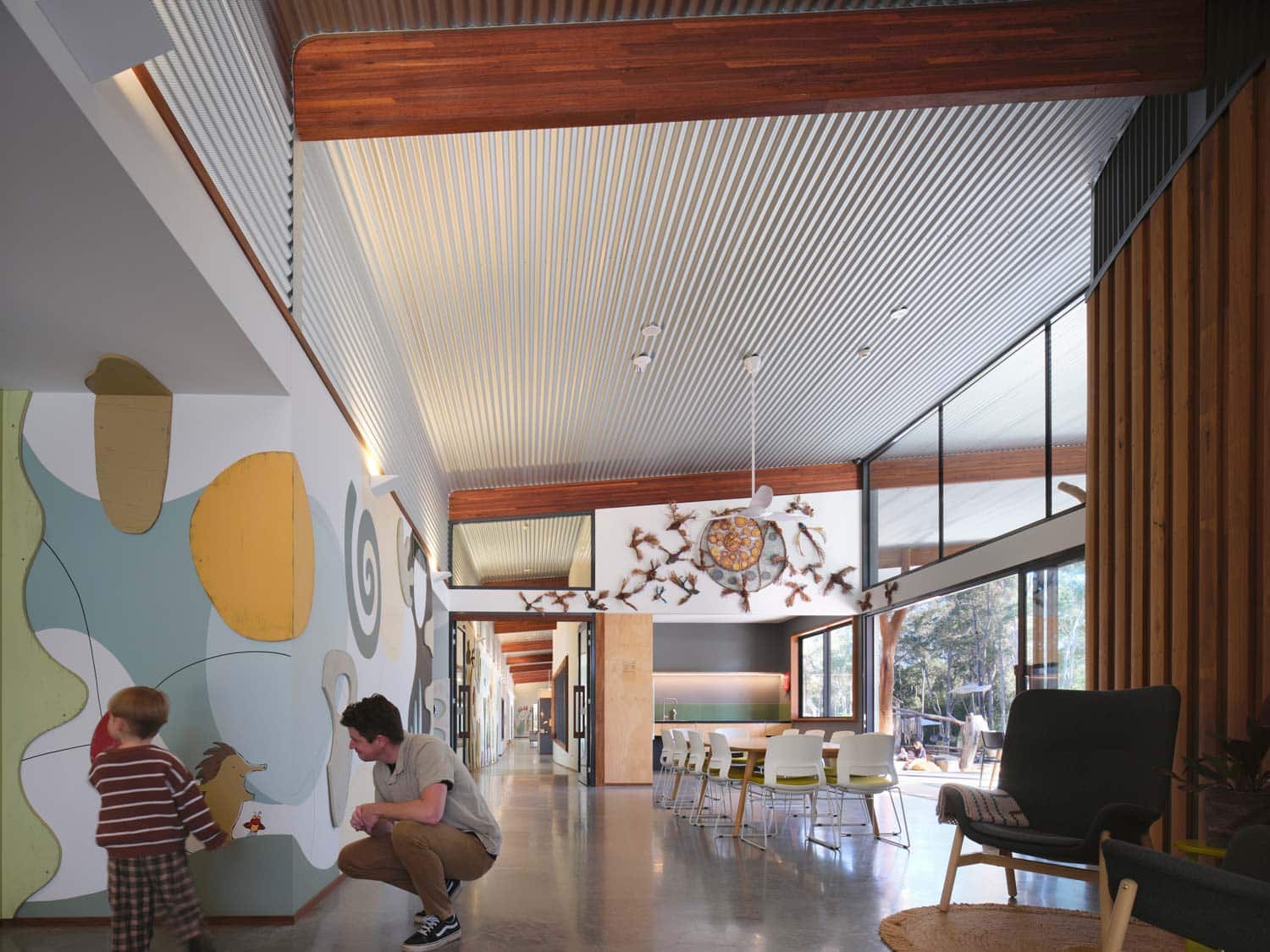
Light and Space: The openness of the building creates a flow between the indoors and outdoor spaces, breaking ‘barriers’ and creating a welcoming space for local community use or to just ‘pop in.’
Connection to Culture: Embedding cultural meaning into both the physical and non-physical design elements, such as incorporating Indigenous animal symbols and soundscapes. Through the dedicated spaces for storytelling, cultural artefacts and family histories, thoughtful connections form between the building, landscape and neighbouring facilities, like the primary school.
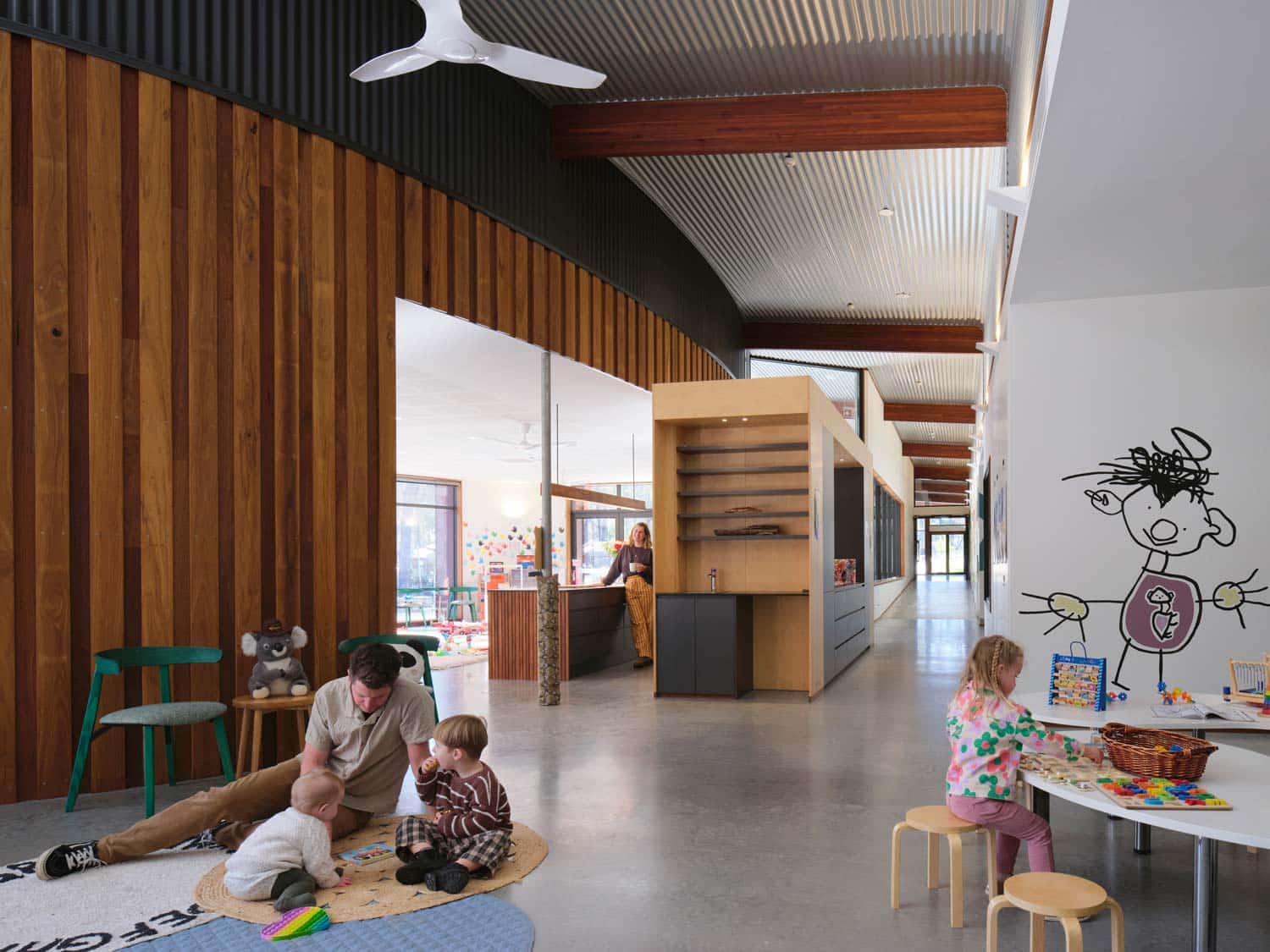
Prospect and Refuge: The building contains peaceful, calming spaces for reflection and healing that are accessibility for people of all ages, abilities, and cultures.
Place-based Materials: Locally sourced materials were incorporated throughout the building—including salvaged bricks, waste bricks and bricks from the nearby Wingham brickworks, as well as locally developed recycled aggregate concrete, and timber reclaimed from the 2021 floods—adding layers of community history.
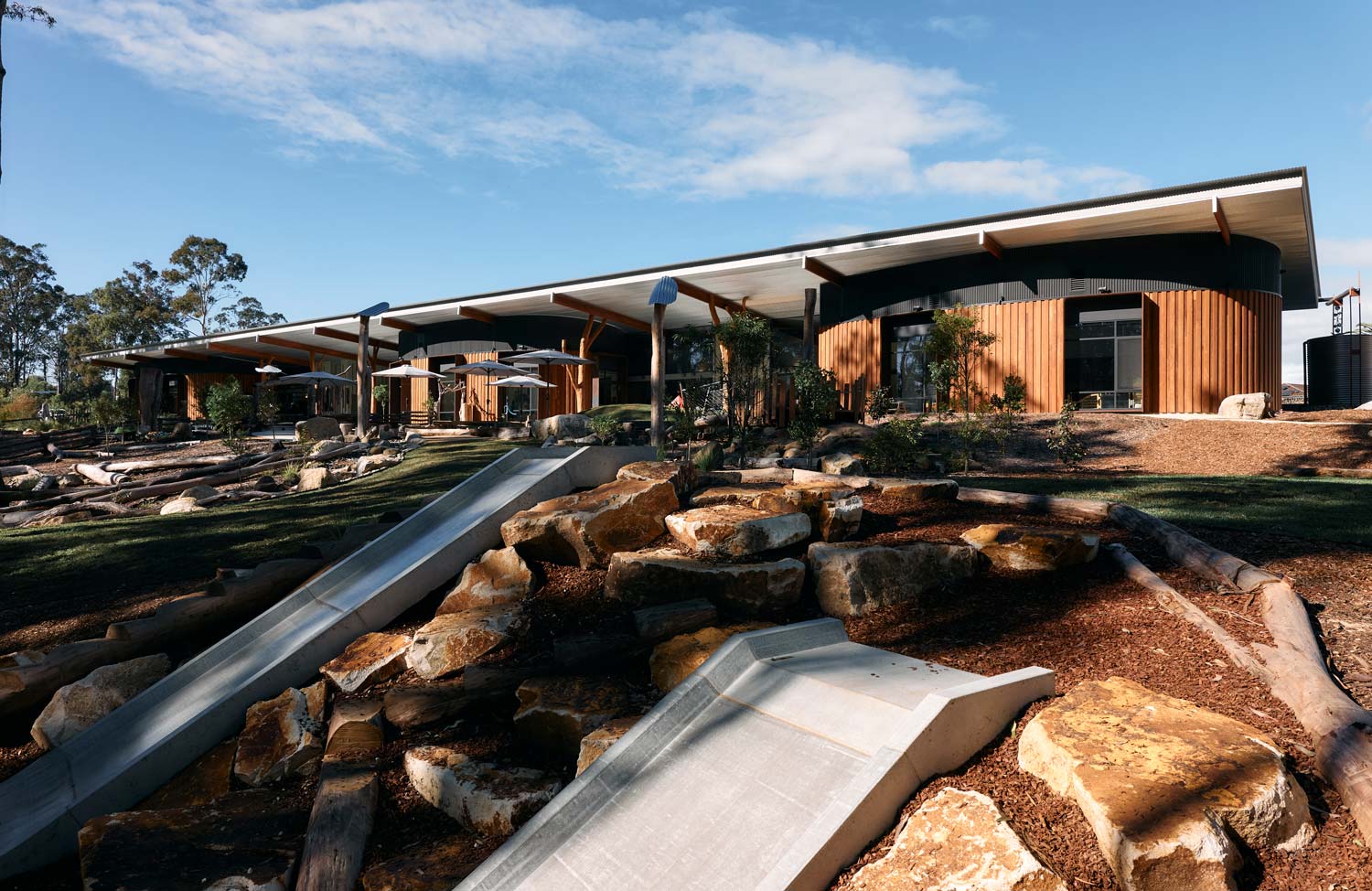
Natural Shapes and Forms: The building blends seamlessly with the natural landscape through the use of organic materials, colours, patterns and textures. The landscape reflects the natural forms of the environment, while creating opportunities for play, culture and education, and encouraging exploration and ‘adventure.’
Place-based Relationship: The landscaping reflects the local seasons, senses, biodiversity and culture, providing a hospitable environment for native wildlife.
Cultural Connection to Place: Elders walked the site with the designers to support a better understanding of the place and its stories. Later, the Elders were part of the process to thin out vegetation for the required AZP, ensuring culturally significant trees were retained.
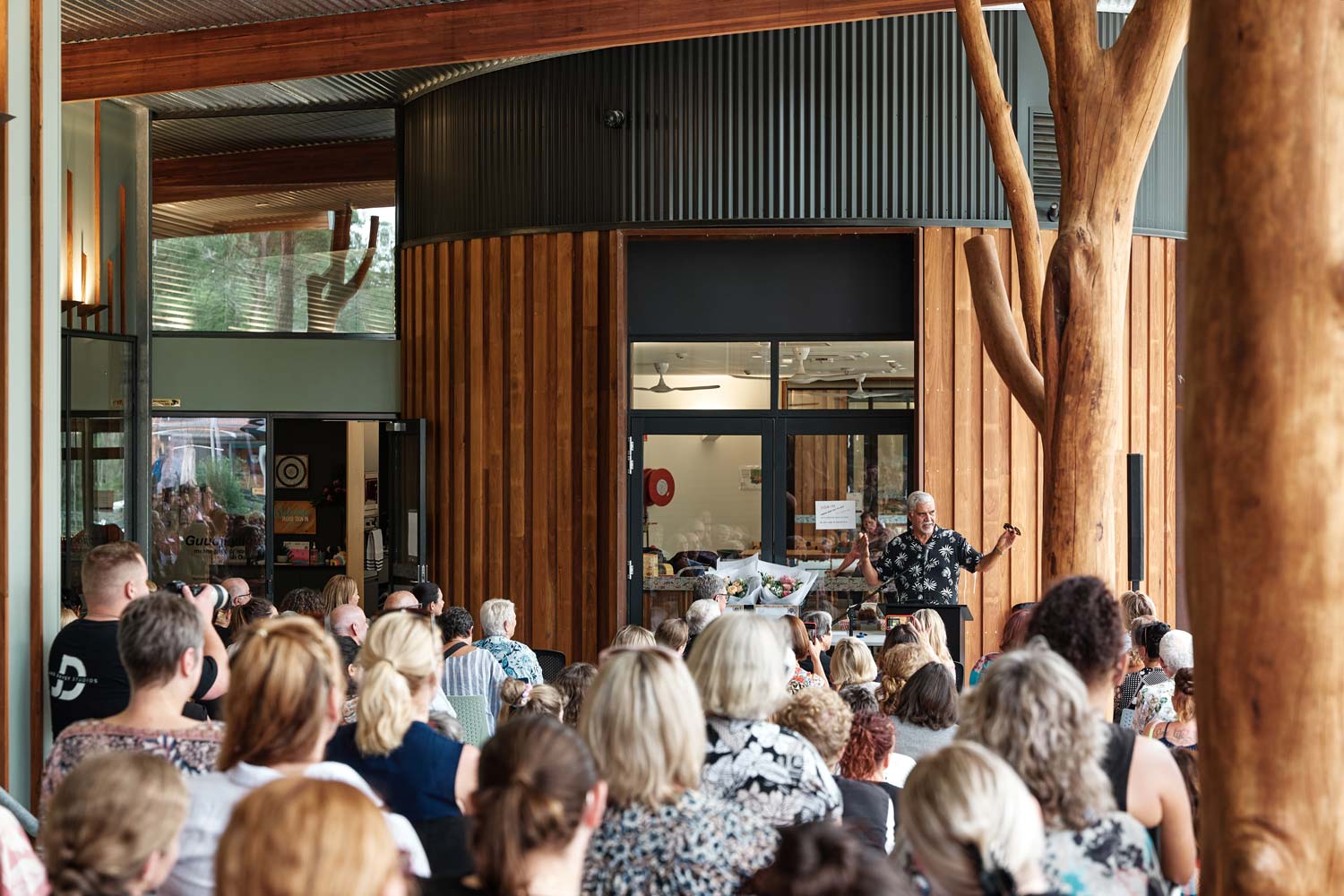
Natural Shapes and Forms: Trees cleared for construction were repurposed for structural and landscape elements.
Place-based Relationships: The building contains open and non-isolated spaces that celebrate and support local cultural activities. Integration of multiple entries into the building break down the idea of a single ‘front door,’ encouraging casual engagement, enhancing accessibility and enriching existing community connections.
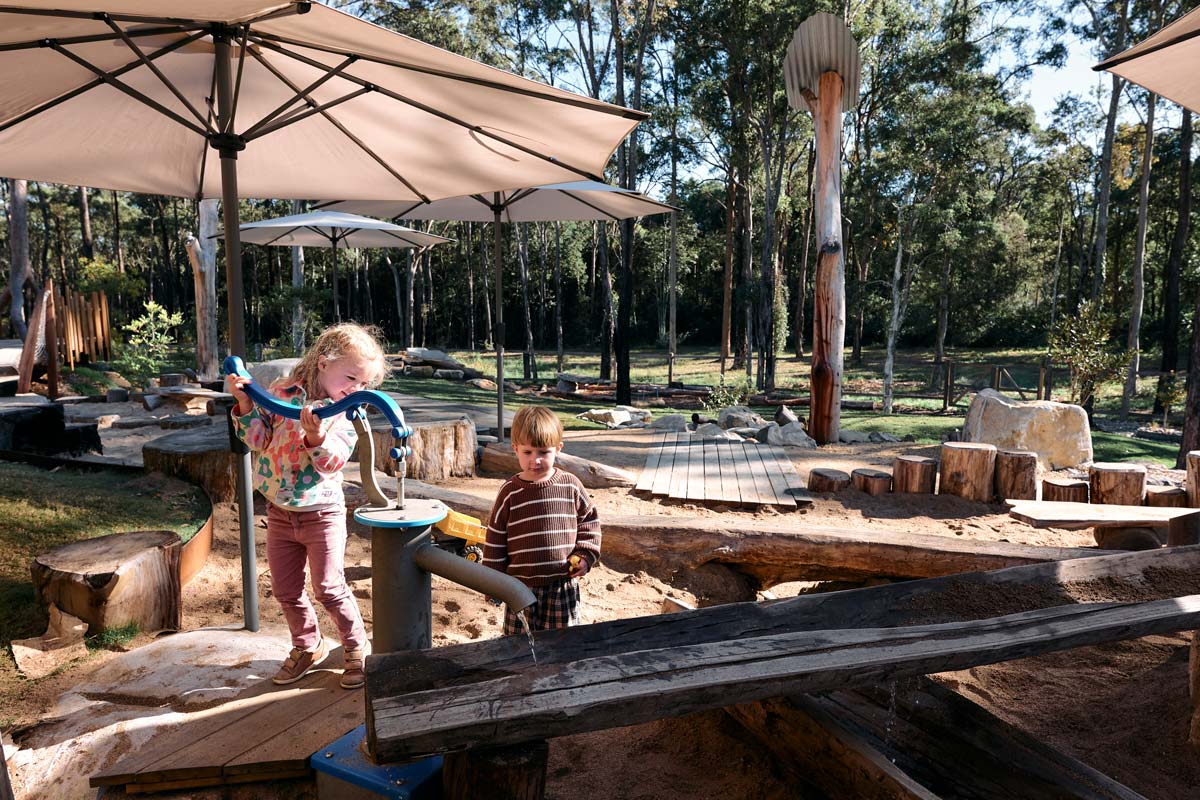
Environmental Features: Local waterways are celebrated through interactive water features for play, teaching children about natural processes.
Direct Connection with Nature: Playspaces courtyards allow children to explore and engage with nature directly.
